For every $1 invested in UX research, you save $10 in development and $100 in post-release maintenance (Forrester)
In spite of the often quoted Forrester finding above, many product teams, especially in smaller companies, are hesitant to invest in user experience research. There are many reasons for this. In this paper I want to tackle the main ones and encourage you to explore how user experience research can help you and your business.
So, why are many hesitant?
Many assume that UX research is too costly and only big companies can afford it, or they have had some dissatisfying experiences. I hope to change your mind with this paper. But first, let’s hear the objections:
- UX research is expensive
- It takes too much time – we need to deliver today and not wait for months of research results
- “We already know everything about our users”
- “we’ll just A/B test our ideas”
- AI will identify the usability issues
- What IS user experience research?
If you agree with any of the above statements, please read on.
Why Care about User Experience and UX Research?
Feel free to skip this part if you don’t need to be convinced.
Before we dive into why invest in UX Research, let’s take one step back and talk about user experience design – why do we care? There is ample evidence that good user experience is a major differentiator in a highly saturated markets (and your company is probably is in one).
It turns out, companies with top-quartile McKinsey Design Index scores outperformed industry-benchmark growth by as much as 2-to-1. This directly translates to significantly higher revenue as customers/users become loyal to the companies (when they have a choice) that care about them, that meet THEIR needs and do not frustrate them unnecessarily.
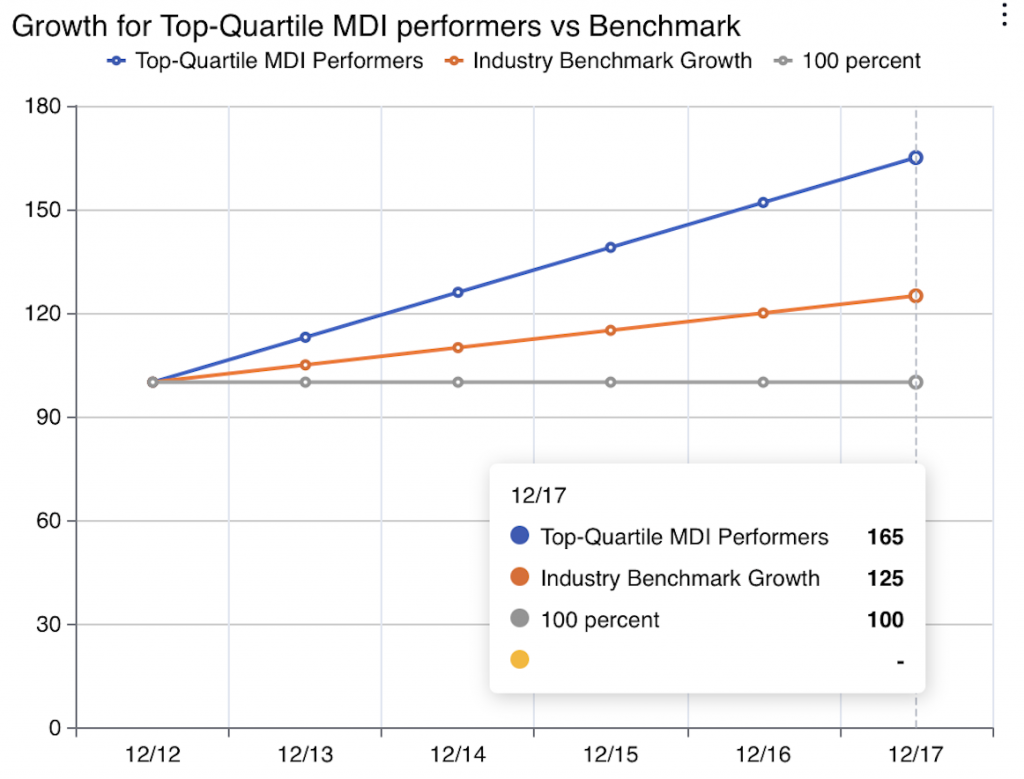
=Now that we have established that good User Experience translates to win-win (a win for customers, and as a result, a win for the company) and let me be the first to admit, this is oversimplified as there are short-term and long-term effects of user experience),
How can you make sure that you provide the best user experience that you can? This is where well-designed and executed
Rapid UX research
comes in. It is not just usability tests and surveys. If given enough room, it will play a pivotal role in
UX Research can solve for
Needfinding
also known as generative research. This can be used as idea validation (if you already have a hypothesis) or identifying what people want / need
ethonographic, field studies, diary studies
UX Strategy
How can you best meet that need, what features / content your (potential) users appreciate
concept testing, diary studies, surveys, treetesting, log analysis
Optimizing
How can we make the use of our product appropriately smooth, adding bumps where they are needed, improving copy, etc.
usability tests, concept tests, tree tests, surveys, field studies
1. Is UX research expensive?
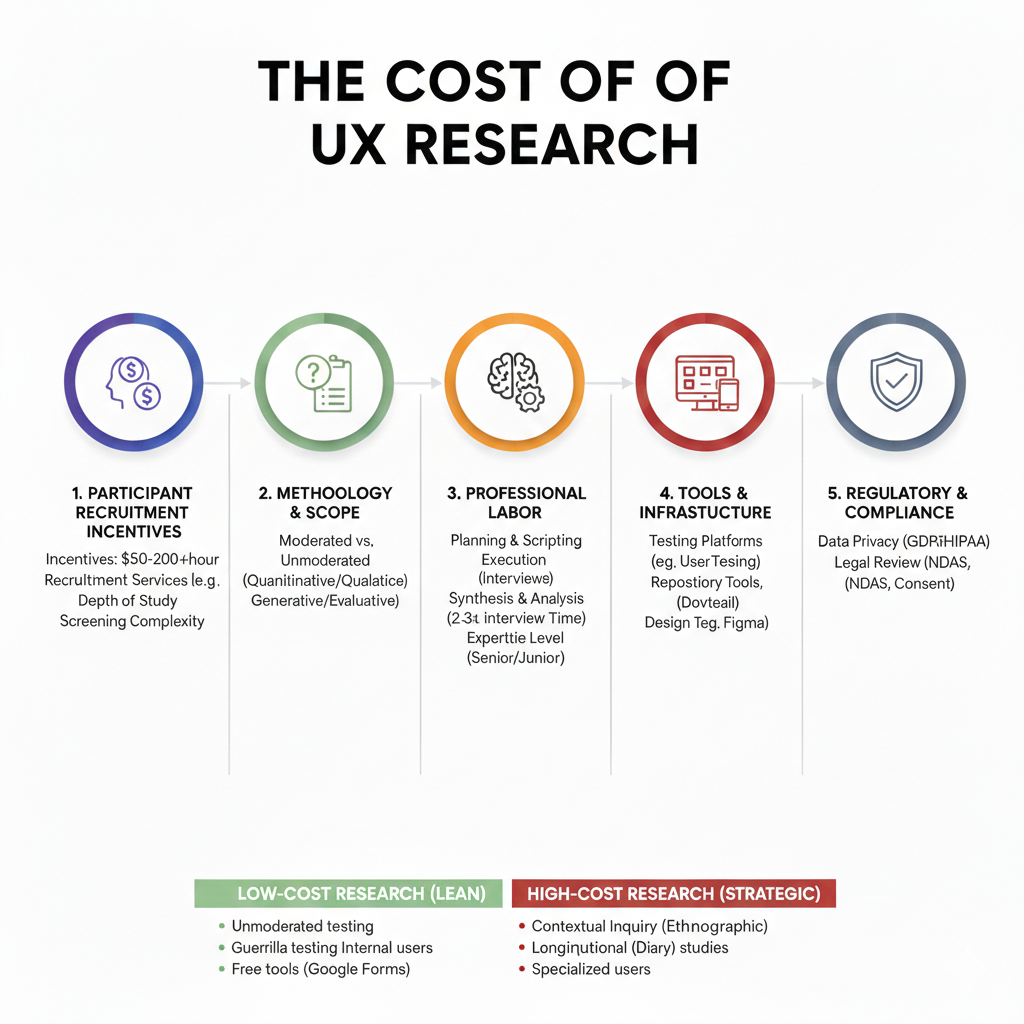
It can be, and indeed it can be wasteful if not well designed and executed. Many companies go to the “big” agencies in Silicon Valley, which tend to have a lot of overhead. (I know that firsthand as I used to work for one). These agencies have marketing, event planning, accounting and visual communication teams and are headquarters in San Francisco and New York.
These are the real costs of UX research:
2. Does UX research take a long time, slowing down work?
It does not have to. You can significantly cut the time requirement by
- Planning ahead so that research sprints will not hold up your work cycle
- Conducting Rapid Research, with a